Riddles for kids are short questions with a clever twist, like “What has hands but can’t clap? A clock.” For a child learning English, each one is a small listening puzzle: they hear the clues, think in English and get to shout the answer.
Start with riddles built from words your child already knows. Then all of their thinking can go into the twist.
In this guide
- Easy riddles for kids
- Why riddles are good English practice
- “What am I?” animal riddles
- Riddles about food and things at home
- Funny riddles that are really jokes
- Hard riddles for kids who want a challenge
- How to ask a riddle so your child can solve it
- How to make up your own riddles
- Riddle games to play at home
- Questions parents ask
Easy riddles for kids
Easy riddles for kids describe an everyday object in a surprising way, so the answer is something your child sees all the time. Ask one, wait, and give a hint if the silence gets long.
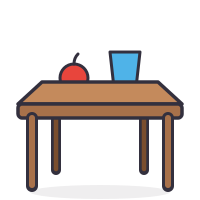 table
 cold
 umbrella
| Riddle | Answer | The twist |
|---|---|---|
| What goes all the way around the yard but never moves? | A fence | It runs along the edge and stays put. |
| What has legs but can’t walk? | A table | Tables stand on four legs. |
| What has teeth but can’t bite? | A comb | The thin parts of a comb are called teeth. |
| What has a neck but no head? | A bottle | The narrow top of a bottle is its neck. |
| What has an eye but can’t see? | A needle | The thread goes through the needle’s eye. |
| What has keys but can’t open a door? | A piano | Piano keys are the black and white parts you press. |
| What gets wetter the more it dries? | A towel | It dries you and gets wet itself. |
| What is full of holes but still holds water? | A sponge | The tiny holes soak the water up. |
| What has a thumb and four fingers but isn’t alive? | A glove | It is shaped like a hand. |
| What has a bed but never sleeps? | A river | The bottom of a river is its bed. |
| What can you catch but not throw? | A cold | “Catch a cold” means get sick with a cold. |
| What goes up when the rain comes down? | An umbrella | You open it up, and the rain falls down on it. |
Several of these answers hide a word with two meanings. Your child learns the riddle and a new use of an old word at the same time.
Why riddles are good English practice
Riddles are good English practice because a child has to understand every clue to find the answer. One missed word, and the answer could be anything.
They also repeat a handful of patterns that kids use all day: “It has…,” “It can…,” “It can’t…” and “What am I?” Hearing the same patterns in riddle after riddle makes them feel natural. If can and can’t are new to your child, our can and can’t lesson practices exactly that pair.
Guessing feels safe, too. A wrong guess in a riddle is part of the game, so kids who freeze when asked “What’s this called?” will often happily shout five wrong answers in a row. Every one of those answers is a word said out loud in English.
And once your child knows a riddle, they want to ask it. Asking a riddle to Grandpa is speaking practice with a built-in reward: the moment he gets it wrong.
“What am I?” animal riddles
Animal riddles are a favorite with kids, because the clues are things they already know well: sounds, colors, homes and funny habits. Say each one in the first person, as if you were the animal.
- “I have a long neck and eat leaves from the tallest trees. What am I?” A giraffe.
- “I’m pink, I roll in the mud and I say oink. What am I?” A pig.
- “I look like a horse, but I wear black and white stripes. What am I?” A zebra.
- “I’m green, I hop and I say ribbit. What am I?” A frog.
- “I carry my house on my back and move very, very slowly. What am I?” A snail.
- “I have a trunk, but I never pack it. What am I?” An elephant.
- “I sleep all day, fly at night and hang upside down. What am I?” A bat.
- “I have eight arms and live in the sea. What am I?” An octopus.
The elephant riddle has a bonus: a trunk is also a big box for clothes, so the joke works twice. For more animals to build riddles around, see our guide to animal names in English.
Riddles about food and things at home
Riddles about food and household objects work well because the answer is usually within reach. Your child can run and touch it, which turns a riddle into a small treasure hunt.
Food riddles
- “I’m yellow and long, and monkeys love me. What am I?” A banana.
- “I’m cold and sweet, and I melt in the sun. What am I?” Ice cream.
- “You crack me open for breakfast, but I’m not a nut. What am I?” An egg.
- “I’m red and crunchy, and I grow on a tree. What am I?” An apple.
- “I’m orange, I grow under the ground, and rabbits love me. What am I?” A carrot.
Riddles around the house
- “You sit on me, and I have four legs and a back. What am I?” A chair.
- “I go up and down, but I never move. What am I?” The stairs.
- “I get smaller every time you take a bath. What am I?” Soap.
- “I’m cold inside, and I keep your milk fresh. What am I?” The fridge.
- “I open and close, and you walk through me. What am I?” A door.
These riddles pair well with word lists your child may already be learning, like our food words and house words for kids. Any word on those lists can become a riddle in a minute.
Funny riddles that are really jokes
Funny riddles for kids usually end in a pun, a word that sounds like another word or has two meanings. Kids who are still learning English may need the pun explained, and that explanation is a mini English lesson in itself.
- “Why can’t a bicycle stand up by itself? Because it’s two-tired.” A bicycle has two tires, and two-tired sounds like too tired.
- “What do you call a sleeping dinosaur? A dino-snore.” Dinosaur sounds like dino-snore.
- “Why are fish so smart? Because they live in schools.” A big group of fish is called a school.
- “What has ears but can’t hear? Corn.” One cob of corn is called an ear.
- “What do you call a bear with no teeth? A gummy bear.” Without teeth, a bear has only gums.
- “Why did the banana go to the doctor? Because it wasn’t peeling well.” Peeling sounds like feeling.
Don’t worry if the first laugh comes a few seconds late. A pun your child understands after a short explanation often becomes the joke they tell everyone for a week.
Hard riddles for kids who want a challenge
Hard riddles for kids hide the answer behind an idea instead of an object, so they take a little longer to crack. Save them for car rides and waiting rooms, when there is time to think.
- “The more you take, the more you leave behind. What are they?” Footsteps.
- “What has a head and a tail but no body?” A coin.
- “What gets bigger the more you take away?” A hole.
- “What belongs to you, but other people use it more than you do?” Your name.
- “I’m tall when I’m new and short when I’m old. What am I?” A candle.
- “What can travel around the world while staying in one corner?” A stamp.
- “What has many rings but no fingers?” A tree.
Hard riddles are a good moment to let your child ask questions back. “Is it alive? Is it in this room? Can I hold it?” Working out the answer together is half the fun.
How to ask a riddle so your child can solve it
Ask a riddle slowly, then give clues one at a time, from hardest to easiest, until your child gets it. A good clue ladder for a cat might look like this:
- “I have whiskers and a long tail.”
- “I sleep in the sun for hours.”
- “I chase mice.”
- “I say meow.”
Teach your child one magic question: “Is it a…?” Every guess then comes out as a full English question. Riddle time also builds comfort with what, where and who questions in general.
How to make up your own riddles
You make up a riddle by describing something with three or four clues, and ending with “What am I?” A simple frame helps kids do it on their own:
- “I am…” (a color or a size)
- “I have…” (a body part or a feature)
- “I can…” (something it does)
- “I live…” (where you find it)
Put together, it sounds like this: “I am orange. I have stripes. I can roar. I live in the jungle. What am I?” A tiger, of course. Let your child make one about a toy, a pet or even you: “I am tall. I have glasses. I can make pancakes. Who am I?”
Kids who like making riddles often like making up silly sentences in general. Our page of tongue twisters for kids is a natural next step.
Riddle games to play at home
Riddle games turn a single riddle into ten minutes of English. Each one below needs nothing more than a few household things.
1. Riddle bag
Hide an object in a bag and give riddle clues about it: “I’m round. I bounce. You kick me.” Your child guesses, then pulls the ball out to check.
2. Riddle treasure hunt
Write a riddle on a piece of paper and hide the next clue where the answer is. “I spin your clothes until they’re clean” sends your child to the washing machine, where the next riddle waits. Three or four stops is plenty, with a small surprise at the end.
3. Riddle of the day
Ask one riddle at breakfast and save the answer for dinner. The whole family gets a day to think, and your child gets to hear everyone’s guesses.
4. Your turn to guess
Let your child ask the riddles while you guess. Guess wrong on purpose a few times: “Is it a… hippo?”
5. Draw the answer
Your child answers by drawing instead of speaking, then says the word out loud while showing the picture. Shy talkers often find this the easiest way in.
Try it today
- Ask two riddles from the first table.
- Play riddle bag with one toy.
- Make up one family riddle before bed.
Questions parents ask
What is the easiest riddle for kids?
The easiest riddles for kids give the answer away with one famous sound, like “I say moo and give you milk. What am I?” Even a beginner can shout “A cow!”
What is the hardest riddle for kids?
“What can fill a room but takes up no space?” is a good hard one, and grown-ups often need a moment for it too. The answer is light.
What is the difference between a riddle and a joke?
A riddle asks your child to work out an answer from clues, while a joke sets up a funny answer nobody is really expected to guess. Many riddles for kids sit somewhere in between, with a pun as the answer.
How do I explain a riddle my child doesn’t get?
Show the double meaning with real things. Point at the hands on a clock, then at your own hands, and say, “Different hands!” Seeing both meanings side by side usually makes the joke click.
What if my child answers a riddle in our home language?
Count it as a win, because your child solved the riddle. Then say the English word together and ask the riddle once more so they can answer in English too.
Start with one riddle today and watch your child’s face when the answer clicks. Tatako lessons are built for the same kind of small win, with each word said three times and a pause for your child to say it out loud, in about five minutes a day. When you’re ready for new words to make riddles with, open a Tatako lesson together.