
· Grammar
Can and can't for kids
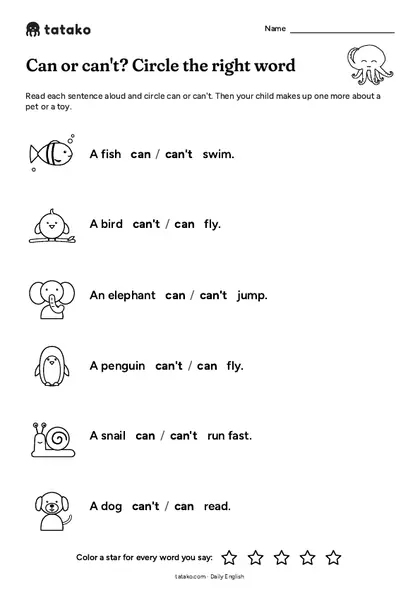
Can means someone is able to do something, and can't means they are not: I can climb, I can't fly. Your child tries both.
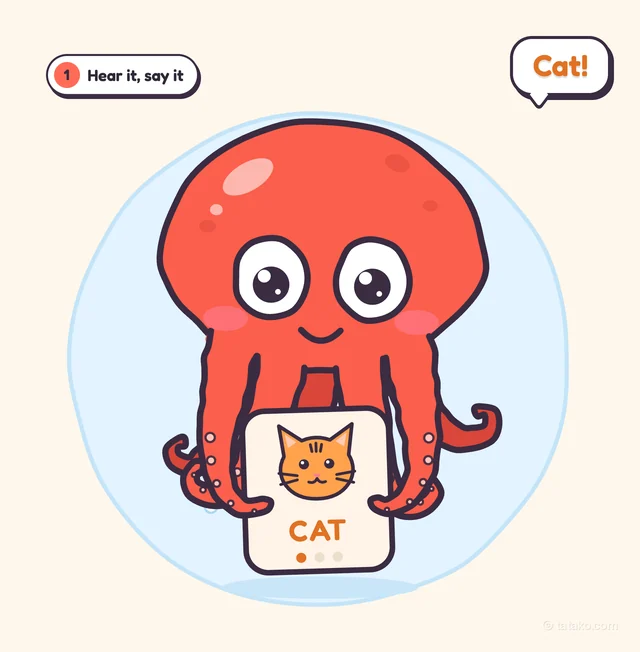
Hear it, say it
Tap a picture to hear the sentence. Then your child answers the question with I can or I can't.
Your child’s turn: a lesson with Tatako
In the app, Tatako says each new word, your child finds its picture and says it back to you. A lesson takes about five minutes, and the first one is free, without a card.
How do you ask a question with can?
Put can first: Can you catch? The short answer brings it back: Yes, I can! No, I can't.
In a statement, can sits right before the action word, and that word stays just as it is: I can jump, birds can fly.
What kids often say, and what to say back
Not quiteI no can reach!
SayI can't reach!
Kids often put no up front. In English, not hooks onto can and makes can't.
Not quiteShe cans swim.
SayShe can swim.
Can stays the same for everyone: I can, she can, the dog can.
Not quiteI can't do nothing!
SayI can't do anything!
Can't already says no, so nothing turns into anything.
Try it at home
- Start a can-do list on the fridge: I can climb, I can catch. Each time your child learns something new, add a line.
- Ask silly questions at bath time: can a fish climb? Can a cat read? Your child answers: no, it can't!
- When your child says I can't, add one word: yet. I can't whistle yet sounds like a plan, not a wall.
Keep going
Every can needs an action word, and our list of action words for kids has plenty to pair with it. Can first showed up as a sight word in is, it, in, can and go.
Every topic so far is in Daily English.


Short a CVC words for kids
Short a CVC words have three sounds with short a in the middle: bag, map, fan, jam, pan. Today your child blends them into words.
Thanksgiving words for kids
Thanksgiving words for kids start at the table: turkey, pie, pumpkin, corn and the feast itself. Today your child names them all.
Verbs for kids
Verbs are doing words: run, jump, clap, hug and sing. Your child says dozens a day, and today they spot them and act them out.
Ready for the next lesson?
Your child learns English. The prompts, the menus and every step of guidance are in your family’s own language.
Start a lesson
