
Conjunctions are joining words, like and, but, or, so and because, that link words and ideas into longer sentences. And is one of the five most common words in English: in a hundred million words of British English, it turns up more than two and a half million times, about once in every thirty-seven words.
Conjunctions for kids start with and, the joining word children hear most often, in pairs like salt and pepper or hide and seek.
In this guide
Conjunctions list
The conjunctions list below has the everyday joining words, what each one does and a sentence to say it in:
| Conjunction | What it does | Say it like this |
|---|---|---|
| and | adds one more thing | “We need bread and milk.” |
| but | adds something different | “The soup is hot, but the juice is cold.” |
| or | gives a choice | “We can walk or ride our bikes.” |
| so | tells what happens as a result | “The puppy was tired, so it lay down.” |
| because | gives a reason | “I’m wearing boots because the ground is wet.” |
| when | points to a time | “Wake me up when it’s time to go.” |
| if | sets a condition | “If it gets dark, turn on the light.” |
| before | puts one thing first | “Wash your hands before you eat.” |
| after | puts one thing next | “We read a book after we brush our teeth.” |
| until | tells how long | “Wait here until I come back.” |
| while | joins two things at the same time | “I sing while I cook.” |
The same first half can lead to two different stories, depending on the joining word: “The park was full, so we went home” and “The park was full, but we found a bench.”
What is a conjunction
A conjunction is a word that joins two words, two groups of words or two whole sentences. It can join things (milk and cookies), places (in the box or under the bed) and ideas (the ice was thin, so we stayed off it).
The word itself means joining. Conjunction comes from the Latin coniungere, to join together, the same root as junction, a place where roads or railway lines meet.
Conjunctions never change their form, so and stays and in every sentence, from a child’s first two-word pair to a long bedtime story. English has three kinds of them: coordinating, subordinating and correlative conjunctions.
Coordinating conjunctions
Coordinating conjunctions join two parts of equal weight, and English has seven of them: for, and, nor, but, or, yet and so. Their first letters spell FANBOYS, a word many teachers use to help children remember them.
And, but, or and so carry most of everyday talk. For, nor and yet sound more formal and turn up mostly in books: “She ran home, for it was late,” “He didn’t eat, nor did he drink,” and “The sun was out, yet the wind was cold.”
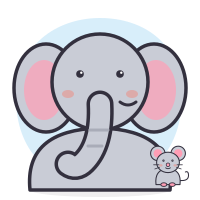
When a coordinating conjunction joins two sentences, each part could stand alone. In “The elephant is big, but the mouse is small,” both halves make sense on their own, and but is the natural joining word for opposites like these. Our guide to opposites has more pairs to join this way.
Subordinating conjunctions
Subordinating conjunctions join a main sentence to a part that can’t stand on its own, and they tell why, when, under what condition or in spite of what something happens: because, when, if, before, after, until, while and although.
In “The cat hid because the dog barked,” the main sentence is “The cat hid,” and “because the dog barked” only makes sense next to it. The joining part can also come first, with a comma after it: “Because the dog barked, the cat hid.”
Although means much the same as but. “Although it was cold, we went outside” says the same thing as “It was cold, but we went outside.”
That can be a joining word too. In “I know that you’re tired,” it links what you know to the main sentence, and English often leaves it out: “I know you’re tired” means the same.
When and if are easy to mix up. When is for something that will happen: “When Daddy comes home, we’ll eat.” If is for something that might happen: “If it rains, we’ll stay in.” When also opens a question, as in “When is lunch?”, and our guide to question words covers when, why and the rest.
Correlative conjunctions
Correlative conjunctions come in pairs that work as a team, and the everyday ones are both and, either or, neither nor and whether or.
- Both … and: “Both Grandma and Grandpa came to lunch.”
- Either … or: “We can have either rice or pasta tonight.”
- Neither … nor: “Neither the door nor the window was open.”
- Whether … or: “Whether it’s sunny or snowy, the ducks come to the pond.”
Each pair joins two parts of the same kind, like two things, two actions or two places, and gives them equal weight in the sentence.
Conjunctions in children’s speech
In children’s speech, and does most of the joining for a long time, and a story often arrives as one long chain: “We went to the beach, and then we found a crab, and then the crab ran away, and then…”
That chain is a real step forward, because the child is putting events in order. Because, but and so join in as children start to explain and to tell stories with a problem in them, in a different order for different children, and before and after usually come later, as children talk more about plans and time.
Many children say “’cause” for because, and plenty of grown-ups do the same in casual talk.
Our lesson on five small everyday words, the, and, a, I and see, gives and its own card, with a sentence your child can say: “I love you, mommy and daddy!”
Conjunctions in other languages
Conjunctions in other languages do the same jobs, and the everyday ones in Spanish and Hindi line up closely with English:
| English | Spanish | Hindi |
|---|---|---|
| and | y | aur (और) |
| but | pero | lekin (लेकिन) |
| or | o | ya (या) |
| so | así que | isliye (इसलिए) |
| because | porque | kyunki (क्योंकि) |
| when | cuando | jab (जब) |
| if | si | agar (अगर) |
Spanish y changes to e before a word that starts with an i sound, as in padre e hijo, father and son, and o changes to u before an o sound, as in siete u ocho, seven or eight. Spanish writes because as one word, porque, and why as two, por qué.
Hindi often pairs agar, if, with to (तो), then, in the second half: agar dhoop nikli, to hum bahar khelenge, if the sun comes out, then we’ll play outside. English usually drops the then. A child who speaks Hindi may keep it in English sentences, and that is correct English too.
Spanish uses que and Hindi uses ki (कि) where English uses that, so “I think that it’s late” is creo que es tarde in Spanish and mujhe lagta hai ki der ho gayi in Hindi.
Our guide on how to raise a bilingual child covers the rest of family life in two languages.
Tatako is built for homes with two languages: the lesson voice speaks English, and a guide voice gives short prompts in your family’s language. Your child hears each word three times with a pause to say it, touches the right one of two pictures and then names the picture first. You can see how the lessons work on the Tatako home page.
How to teach conjunctions
Teach conjunctions through everyday talk, with each new joining word tied to something happening right then.
- One new joining word at a time. Start with and, and give each new joining word plenty of everyday use before the next one comes in.
- Join words your child already knows. Two familiar words with and in the middle make a first joined phrase: shoes and socks, cup and spoon, hat and scarf.
- Read aloud. Many picture books move along with but and so: the bear was hungry, but the cupboard was empty, so he went out to find berries. Our moral stories work the same way, with a problem and a fix in every story.
- Waiting words. Until and while fit the moments when you wait together: “We wait until it’s our turn,” “You can draw while I finish the dishes.”
Conjunctions games
The best conjunctions games at home are glue the sentences, tomorrow’s plans, feelings cards and flip it. Feelings cards needs a set of four feelings cards, and the other three need only talk.
1. Glue the sentences
Say two short sentences about something you can both see: “The bus is red. The bus is full.” Your child glues them into one with a joining word: “The bus is red, and it’s full.” Next round, pick two sentences that need but: “The bus is full. We got a seat.” becomes “The bus is full, but we got a seat.” Keep going with whatever passes by: a dog, a truck, a bike.
2. Tomorrow’s plans
At dinner, plan tomorrow together, with when for the sure things and if for the things that might happen. You start with a sure thing: “When we wake up, we’ll have pancakes.” Your child adds an if plan: “If the library is open, we’ll get a new book.” Take turns until the day is planned from breakfast to bedtime. The next evening, look back together and say which if plans happened.
3. Feelings cards
Print our feelings flashcards, where each card has a picture and the word for happy, sad, angry or scared, or draw the four faces on scraps of paper. Shuffle the cards into a pile. Take turns taking the top card and saying a because sentence for that feeling: “I’m happy because it’s Saturday.” “I’m scared because the thunder is loud.” When a card comes up again, the reason has to be new.
4. Flip it
Say a sentence with because: “I’m eating because I’m hungry.” Your child flips it around with so: “I’m hungry, so I’m eating.” Try a few more, like “I’m yawning because I’m sleepy,” which becomes “I’m sleepy, so I’m yawning.” The reason and the result trade places, and the meaning stays the same.
Try it today
- At bedtime, tell your child one thing from your day with after: “After we got home, I watered the plants.”
- Tell your child about a small problem from your day with but and so: “The elevator was broken, but the stairs were fine, so I walked up.”
- Say a neither … nor sentence about the weather today: “It’s neither hot nor cold.”
- On the way home, say one thing you will do when you get there.
Questions parents ask
Can you start a sentence with and or because?
Starting a sentence with and, but or because is correct English, and many good writers do it. A sentence that starts with because needs its main part too: “Because the music was loud, we closed the door.”
Is then a conjunction?
Then is an adverb that tells when something happens, so on its own it can’t join two sentences. It joins them with help from and: “We ate, and then we played.”
Is so a conjunction?
So is a conjunction when it means for that reason, as in “The bag was heavy, so I carried it with two hands.” In “The water is so cold,” so tells how cold the water is and joins nothing.
How many conjunctions are there in English?
English has seven coordinating conjunctions, a handful of pairs like either or, and dozens of subordinating conjunctions, from because and when to although and unless.
When does and need a comma?
And usually takes a comma when it joins two full sentences: “The goat jumped, and the hen ran.” Between two words, like cats and dogs, there is no comma. In a list of three or more, many American writers put a comma before the last and: “apples, bananas, and pears.”
What is the difference between a conjunction and a preposition?
A conjunction joins a whole idea with its own verb, and a preposition comes before a noun. Before, after and until can do both jobs: in “after lunch,” after is a preposition, and in “after we eat,” it is a conjunction. Our guide to prepositions for kids covers in, on, under and the rest.
Every long sentence your child says is held together by a few small joining words. For the English words that go between them, open a Tatako lesson. It takes about five minutes a day, and your child doesn’t need to read anything.