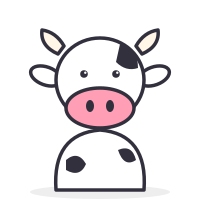
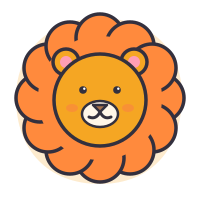
Collective nouns for animals are the words English uses for a group of animals together: a herd of cows, a flock of sheep, a pack of wolves, a pride of lions and a swarm of bees. Each one names the whole group as one thing, so “Look at that flock!” works as well as “Look at those birds!” A swarm of honeybees holds about ten thousand bees and a single queen.
A handful of group words covers most animals, and the rest are old, funny extras that children love to collect.
In this guide
- Collective nouns for animals list
- Herd, flock, pack and swarm
- Group words for animals in the water
- Group words for young animals
- Fun collective nouns for animals
- Where collective nouns come from
- Is or are with collective nouns
- Collective nouns in other languages
- Games with collective nouns
- Questions parents ask
Collective nouns for animals list
The collective nouns for animals on this list are the ones a child hears most often, on a farm, in a park, at the zoo and in stories:
 sheep
 fish
| Animals | Collective noun |
|---|---|
| cows | a herd |
| elephants | a herd |
| deer | a herd |
| sheep | a flock |
| birds | a flock |
| wolves | a pack |
| dogs | a pack |
| lions | a pride |
| bees | a swarm |
| ants | a colony |
| fish | a shoal |
| dolphins | a pod |
| monkeys | a troop |
| geese | a gaggle |
| puppies | a litter |
| chicks | a brood |
| penguins | a colony |
| camels | a caravan |
| bats | a colony |
| horses | a team |
Some group words also tell you what the animals are doing: a team of horses pulls a cart together, and a caravan of camels walks in a long line across the desert. Our list of animal names has the animals themselves, and our animal activity sheets put animal words into short games on paper: match, listen and circle, then draw.
Herd, flock, pack and swarm
Herd, flock, pack and swarm are the four group words that cover most animals, and each one goes with a kind of animal:
- Herd: big animals that eat grass and leaves and move together on land, such as cows, buffaloes, elephants, deer and zebras.
- Flock: birds of almost any kind, and also sheep and goats: a flock of pigeons, a flock of parrots, a flock of sheep.
- Pack: animals that hunt together, such as wolves and wild dogs, and also dogs that roam a street together.
- Swarm: flying insects in a big moving cloud, such as bees, flies, mosquitoes and locusts.
In 2020, swarms of desert locusts flew into Rajasthan and several nearby states, and a single swarm could cover many square kilometers of sky, with 40 to 80 million locusts in each square kilometer. When bees leave an old hive together to look for a new home, beekeepers call that a swarm too. Our guide to insect names has the bees, flies and mosquitoes, and animals and their homes has the hive.
Group words for animals in the water
Group words for animals in the water change with the animal: fish swim in a shoal, dolphins and whales travel in a pod, and sea otters float together in a raft.
- Shoal: any group of fish swimming together. Fish in a shoal stay close for safety, and a big shoal can turn all at once, like one animal.
- Pod: dolphins or whales that travel together, often one family. Killer whales can stay in the same pod as their mothers all their lives.
- Raft: sea otters floating on their backs, or ducks resting together on a pond. Sea otters sometimes hold paws or wrap themselves in kelp while they sleep, so they do not drift apart.
- Bloom or smack: jellyfish, when thousands of them gather in one place at the same time.
- Bed: oysters, mussels or clams growing close together on the sea floor.
Penguins have two group words. On land, where they nest by the thousands, a group of penguins is a colony, and out on the water it is a raft.
Group words for young animals
Group words for young animals tell you that the young ones came at the same time, like a litter of puppies born to one mother or a brood of chicks that hatched together:
- Litter: puppies, kittens, piglets or rabbit kits born together to one mother.
- Brood: chicks or ducklings from one nest of eggs. A hen that sits on her chicks to keep them warm is said to brood them.
- Clutch: the eggs a bird lays in one nest before she starts sitting on them.
Our guide to animals and their young ones has the names of the young ones themselves, from kid to cygnet.
Fun collective nouns for animals
Fun collective nouns for animals are the ones that paint a picture, and most of them fit the animal in some way:
- a tower of giraffes: they stand tall together, heads up in the treetops
- a crash of rhinos: a running rhino crashes through the bushes
- a dazzle of zebras: their stripes dazzle the eye when they run
- a flamboyance of flamingos: flamboyant means bright and showy, like their pink feathers
- a prickle of porcupines: they are covered in prickly quills
- a parliament of owls: they look serious and wise, like people at a meeting
- a murder of crows: an old word from the 1400s, when crows were linked with bad luck
- a sloth or a sleuth of bears: both are old spellings of a word that meant slowness
- a business of ferrets: they are always busy, poking into every hole
- an exaltation of larks: larks sing as they rise high into the sky
- a mob of kangaroos: the everyday word in Australia
- a murmuration of starlings: huge flocks swirl in the evening sky with a soft rushing sound
People use these words to have fun with language, in stories, quizzes and picture captions. In everyday talk, a flock of crows and a group of owls are just as right.
Where collective nouns come from
Many collective nouns for animals come from long lists written in England in the 1400s, when knowing the right group word for each animal was a sign of good manners among hunters and nobles. A list printed at St Albans in 1486 already has a pride of lions, a sleuth of bears, a gaggle of geese and an exalting of larks, the older form of exaltation.
Some of the old words faded away, and new funny ones kept appearing long after, made up by writers and word lovers. That is why one animal can have two or three group words.
Is or are with collective nouns
Collective nouns usually take is in American English, because the group counts as one thing: “The herd is crossing the road.” In British English and Indian English, both is and are are common: “The pride is resting” when the group acts as one, and “The pride are fighting over their food” when you think of the separate lions.
After of, the animal goes in its plural form: a pack of wolves, a litter of puppies, a herd of deer. Some animal names stay the same in the plural, like sheep, deer and fish, and our lesson on plural nouns has the ones that just add -s.
Collective nouns in other languages
Collective nouns in other languages do the same job, and Hindi uses one word, jhund (झुंड), for most groups of animals, where Spanish and French have several:
| English | Hindi | Spanish | French |
|---|---|---|---|
| a herd of cows | गायों का झुंड (gaayon ka jhund) | una manada de vacas | un troupeau de vaches |
| a flock of sheep | भेड़ों का झुंड (bhedon ka jhund) | un rebaño de ovejas | un troupeau de moutons |
| a flock of birds | पक्षियों का झुंड (pakshiyon ka jhund) | una bandada de pájaros | une volée d’oiseaux |
| a pack of wolves | भेड़ियों का झुंड (bhediyon ka jhund) | una manada de lobos | une meute de loups |
| a swarm of bees | मधुमक्खियों का झुंड (madhumakkhiyon ka jhund) | un enjambre de abejas | un essaim d’abeilles |
| a shoal of fish | मछलियों का झुंड (machhliyon ka jhund) | un banco de peces | un banc de poissons |
Hindi also has revad (रेवड़) for a flock of sheep or goats, and Spanish has jauría for a pack of hunting dogs. A family that speaks Hindi at home can say jhund first and then the English word that fits, “haathiyon ka jhund, a herd of elephants,” and the child hears how English splits one home word into several. Our post on the mother tongue covers keeping the home language strong while English grows.
Games with collective nouns
Games with collective nouns need washable paint, paper, scissors, a kitchen sieve, a snack, a long strip of paper, a black marker, a few toy animals, a washable window marker and a damp cloth: thumbprint herd, shoal in a sieve, caravan to the oasis, zebra crossing and flock on the window.
1. Thumbprint herd
Press your child’s thumb into a little washable paint and print a row of thumbprints across a sheet of paper. Draw four short legs and an eye on each one, and name the group: “A herd of cows!” Another day, print a flock of white sheep on dark paper, or a swarm of tiny fingerprint bees around a flower. Use paint made for children and wash hands as soon as the prints are done.
2. Shoal in a sieve
Cut a handful of small fish out of paper, scatter them across the floor as the sea and give your child a kitchen sieve as the net: “Catch the shoal!” One fish in the sieve is just a fish, and a big scoop full of them is a shoal: “I caught a whole shoal!”
3. Caravan to the oasis
Make a caravan of camels at home. You walk in front as the first camel, your child follows close behind, and anyone else at home joins the end of the line: “A caravan of camels, off to the oasis!” Walk slowly through the house to the oasis, a snack waiting on the kitchen table, and say it when you get there: “The caravan has reached the oasis!” Clear toys and loose rugs off the path first.
4. Zebra crossing
Draw a zebra crossing on a long strip of paper with a black marker and lay it across the table as a road. Your child walks a few toy animals over it together and says what is happening: “Stop, the herd is crossing!” Then send over another group with its own word: “Now the flock is crossing!”
5. Flock on the window
Draw one small bird on a closed window with a washable window marker: a body, a beak and two thin legs. Your child draws another, then another: “A bird lands. Another bird lands. Now it’s a flock!” Clap your hands, and the whole flock flies away as your child wipes the glass with a damp cloth. Draw low on the glass, so your child stays on the floor and never climbs a chair by the window.
Try it today
- At the window or in the park, find a group of birds and name it with its group word: “A flock of pigeons!”
- Pause a nature show at a big group of animals and ask your child, “What is this group called?”
- On a drive or a walk, name any group you pass and use is: “A herd of buffaloes is on the road!”
Questions parents ask
What is a group of cats called?
A group of grown cats is a clowder, an old word that few people use in everyday talk, and a group of kittens born together is a litter or, in older English, a kindle. Most people simply say a group of cats.
What is a group of monkeys called?
A group of monkeys is a troop. In India, gray langurs and rhesus macaques both live in troops, and a langur troop can have dozens of members that travel, eat and rest together.
What is a group of lions called?
A group of lions is a pride: a few lionesses, their cubs and one or more males. The only wild lions in Asia live in and around Gir National Park in Gujarat, and there the males usually live apart and join the lionesses only now and then.
What is a group of elephants called?
A group of elephants is a herd, and it is a family led by the oldest female, called the matriarch, with her sisters, daughters and their calves. Young males leave the herd as they grow up and live alone or in small groups of their own.
From one bird to a whole flock, English grows the same way, one word at a time: each Tatako lesson is about five minutes long, and every new word comes three times, with a pause for your child to say it.