
· Sounds
Rhyming words
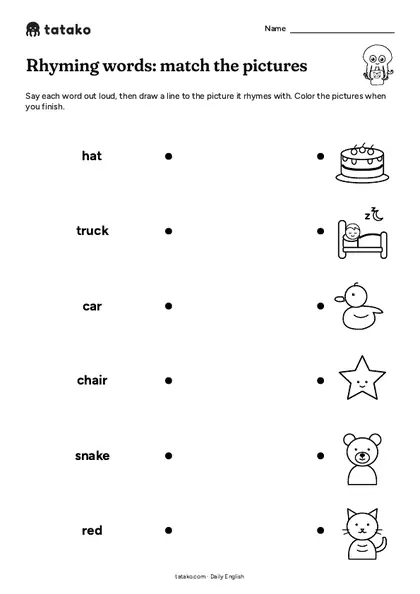
Rhyming words end with the same sound: cat and hat, duck and truck. Your child hears them in funny sentences and makes up new ones.
Hear it, say it
Tap a picture to hear the word, then the sentence. Clap once on each rhyme.
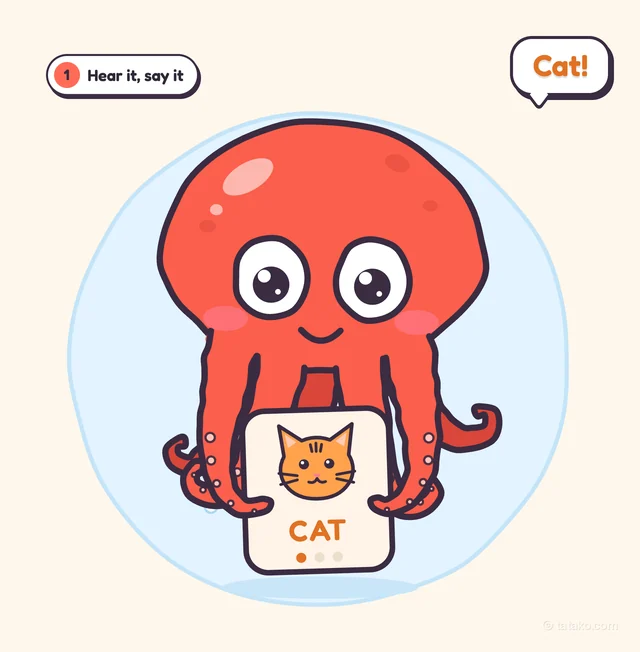
Your child’s turn: a lesson with Tatako
In the app, Tatako says each new word, your child finds its picture and says it back to you. A lesson takes about five minutes, and the first one is free, without a card.
Why do rhymes matter for my child?
Because rhyming trains the ear to tell the start of a word from its ending. Reading later leans on that same skill.
Rhymes live in sound, not spelling: bear and chair rhyme, so play with your voice first.
What kids often say, and what to say back
Not quiteduck, dog
Sayduck, truck
The same start is not a rhyme. Say the endings slowly: d-uck, tr-uck.
Not quitecat, dog
Saycat, hat
Kids often pick a word that goes with the meaning. Praise it, then offer hat.
Not quitebed, bad
Saybed, red
The middle sound counts too: bed and red match, bad does not.
Try it at home
- Play rhyme ping-pong on the drive to school: you say cat, your child answers with a rhyme. Made-up words like zat count.
- Read a rhyming picture book and pause before the last word of a line. Your child fills it in.
- Pair up rhyming things around the house, like a bear on a chair, and say each pair together.
Keep going
Rhymes grow fastest in songs, and our guide to English songs for kids has the ones worth singing every day. Rhyming also pairs well with the first sight words, the little words that hold every rhyme together.
Every topic so far is in Daily English.

Short a CVC words for kids
Short a CVC words have three sounds with short a in the middle: bag, map, fan, jam, pan. Today your child blends them into words.
Thanksgiving words for kids
Thanksgiving words for kids start at the table: turkey, pie, pumpkin, corn and the feast itself. Today your child names them all.
Verbs for kids
Verbs are doing words: run, jump, clap, hug and sing. Your child says dozens a day, and today they spot them and act them out.
Ready for the next lesson?
Your child learns English. The prompts, the menus and every step of guidance are in your family’s own language.
Start a lesson
