Vowels and consonants are the two kinds of letters in the English alphabet. The vowels are A, E, I, O and U, the other 21 letters are consonants, and one of those, Y, also works as a vowel in words like gym and sky. The vowel E alone is about one letter in every eight in written English.
The same split runs through the sounds of speech, so the words vowel and consonant can name a sound as well as a letter.
In this guide
Vowels and consonants list
The vowels and consonants list puts all 26 letters of the alphabet into two groups, with Y in both:
| Group | Letters | How many | Words to hear them in |
|---|---|---|---|
| Vowels | A, E, I, O, U | 5 | apple, egg, ink, on, up |
| Consonants | B, C, D, F, G, H, J, K, L, M, N, P, Q, R, S, T, V, W, X, Y, Z | 21 | bat, dog, fish, jam, zip |
| Both | Y | 1 | yes as a consonant, sky as a vowel |
Only five of the 26 letters are vowels, and almost every word needs one, so A, O and I join E among the six most common letters in written English.
Our alphabet tracing worksheets give each letter from A to Z its own page, with the capital and small letter to trace, a picture and a first English word, and the five vowel pages make a short first set.
What is a vowel
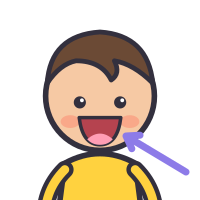
A vowel is a sound made with the mouth open and the voice running through it without a stop, like the a in cat or the ee in see. The mouth stays open for each one, wide for the a in cat and almost closed for the ee in see, and the tongue and lips shape the sound.
Nearly every syllable is built around a vowel sound: cat has one, pen-cil has two and ba-na-na has three. The vowel is also the loudest, longest part of a syllable, and the part a child hears best when a word is said slowly.
What is a consonant
A consonant is a sound made by stopping or squeezing the air on its way out. The lips meet for b, m and p, the front of the tongue presses up behind the top teeth for t, d and n, and the back of the tongue rises for k and g.
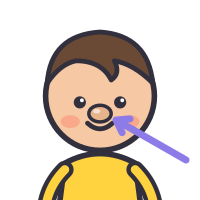
Three consonant sounds, m, n and the ng at the end of sing, send the air out through the nose.
Many consonants come in pairs that use the same mouth shape, one with the voice switched on and one with only air: b and p, d and t, g and k, v and f, z and s. Children often mix up the two sounds of a pair, so “pig” can come out as “big” until your child hears the difference.
English has more consonant sounds than consonant letters, so some sounds take two letters, like sh in ship and ch in chair. Our tongue twisters help with the trickiest ones.
Short and long vowels
Short and long vowels are the two main sounds of each vowel letter: the short a in cat, and the long a in cake, which sounds like the name of the letter.
 cat
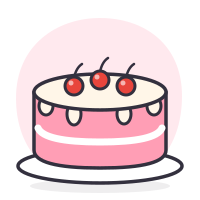 cake
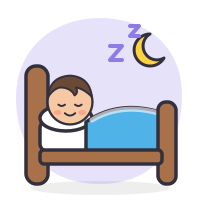 bed
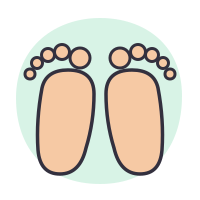 feet
| Vowel | Short sound | Long sound |
|---|---|---|
| A | cat, bag | cake, rain |
| E | bed, hen | feet, sea |
| I | pig, sit | bike, night |
| O | dog, pot | boat, nose |
| U | cup, sun | music, huge |
Short vowels come first in reading, because they sit in the middle of the first words children sound out, like bag, hen and sun. Our lesson on short a CVC words starts with the first of them.
A silent e at the end of a word often turns a short vowel into a long one: cap becomes cape, kit becomes kite and hop becomes hope. The e makes no sound of its own and changes the vowel before it.
A vowel letter can also make sounds that are neither short nor long. The a in car, in ball and at the start of about are three more sounds for the same letter.
Is Y a vowel or a consonant
Y is a consonant at the start of a word or a syllable and a vowel almost everywhere else. In yes, yellow and yak it makes its own sound, the one at the start of you.
As a vowel, Y takes the sounds of other vowels. It sounds like a short i in gym and myth, like a long i in sky and fly, and like ee at the end of happy and sunny. A simple check: if Y is the only vowel sound in its syllable, it is doing a vowel’s job.
A or an
A or an depends on the first sound of the next word: an goes before a vowel sound, as in an apple and an egg, and a goes before a consonant sound, as in a dog.
The sound counts more than the letter. Hour starts with a silent h, so it is an hour, and uniform starts with a y sound, so it is a uniform. Letters said by their names follow the same rule: it is an F and an S, because those names start with an e sound, and a U, because the name of U starts with a y sound. Children who hear the first sound of a word clearly pick this rule up by ear long before anyone explains it.
How to teach vowels and consonants
Teach vowels and consonants through sounds first and names later, starting with the short vowels and the consonants your child hears every day.
- Sounds before group names. Talk about “the a in apple” long before the word vowel comes up. The names of the two groups help only once your child can hear the sounds.
- A few letters at a time. A handful of consonants and two short vowels already make dozens of words, so reading can start well before the whole alphabet is in place.
- Feel the mouth. Say “ah” and then “m” with a finger resting on the lips. The lips stay apart for the vowel and press together for the consonant.
- Name the middle sound. When your child sounds out a word like pig, say the middle sound on its own and call it by its name: “That’s the vowel.”
Our guide to phonics for kids at home covers the reading steps that follow, from single sounds to whole words.
Vowels and consonants games
The best vowels and consonants games at home are sing it or stop, buzz or hiss, hold your nose, six letters and one-vowel words. Only the six letters game needs anything, six scraps of paper and a pencil, and the other four need nothing but your voices and hands.
1. Sing it or stop
Sing one line of a song your child knows on “aaa,” then on “ooo.” Now try the same line on “t”: the tune falls apart into little taps. Hum it on “mmm” and the song comes back, because a few consonants, like m and n, can carry a tune too. Vowels can always carry one.
2. Buzz or hiss
Ask your child to rest a hand flat on the front of their throat and say “zzz” with you, then “sss.” The buzz comes and goes: z uses the voice, and s is only air. Try v and f next, and let your child call out which one buzzes.
3. Hold your nose
Hum “mmm” together, then pinch your noses shut and try again: the hum stops, because m needs the nose. Say “aaa” and “sss” with your noses pinched, and they sound just as before. Last, say “my nose” with a pinched nose and listen to it turn into “by dose,” because the m turns into a b and the n into a d.
4. Six letters
Write s, a, t, i, p and n on six scraps of paper, the first letters many phonics programs teach. Take turns building words with them: at, sit, tap, pin, snap, spin. Every word needs a or i, and the longest one, paints, uses all six.
5. One-vowel words
Take turns naming words with only one vowel letter in them: cat, frog, stamp. Each new word has to be longer than the last, and the round ends when nobody can go longer. Strengths, with nine letters around a single e, is hard to beat.
Vowels and consonants in two languages
Vowels and consonants in Spanish and Hindi follow other rules, and those rules explain many of the slips children make in English.
Spanish has the same five vowel letters, the vocales, and each one keeps a single sound: a is always “ah” and e is always “eh.” English gives those five letters many more sounds, so a child who reads Spanish may read English vowels the Spanish way at first. Spanish words almost never start with s and another consonant, so “school” can come out as “eschool” until the cluster feels familiar. Spanish also uses y on its own as a word: y means and, and it is read like the vowel i, as in pan y leche, bread and milk.
In Hindi, vowels are swar (स्वर) and consonants are vyanjan (व्यंजन), and the varnamala lists all the vowels before the consonants. Every Hindi consonant carries a built-in a sound, so क reads ka, and any other vowel after it is written as a small mark called a matra: कि reads ki. Hindi even gives the small puff of air after an English p at the start of a word its own letter: प is pa without the puff, and फ is pha with it.
Two languages give a child two sets of sounds to compare, and comparing them helps a child hear each set more clearly. Our guide on how to raise a bilingual child covers the rest of family life in two languages.
Tatako is built for homes with two languages: the lesson voice speaks English, and a guide voice gives short prompts in your family’s language. Your child hears each word three times with a pause to say it, touches the right one of two pictures and then names the picture first. You can see how the lessons work on the Tatako home page.
Try it today
- Sing one line of a favorite song on “aaa,” then on “t,” and listen to what happens.
- Feel the buzz of “zzz” and the hiss of “sss” with a hand on the throat.
- Build three words from s, a, t, i, p and n.
- Write sun, map and hen in two colors, vowels in red and consonants in blue.
Questions parents ask
How many vowel sounds are there in English?
English has about 20 vowel sounds in standard British speech, all spelled with the five vowel letters, alone or in teams, with help from Y and W. Phonics programs count 44 sounds in English altogether, so the other 24 or so are consonant sounds.
Is W a vowel?
W works as a consonant in words like wet and window. After another vowel it helps spell a vowel sound, as in saw, new and cow, and in a few words borrowed from Welsh, like cwm, a hollow in a mountainside, it is the vowel itself.
Why are they called vowels and consonants?
Vowel comes from the Latin word vocalis, “of the voice,” because a vowel is the voice itself. Consonant comes from the Latin consonare, “to sound together,” because a consonant sounds together with a vowel.
Can a word have no vowels?
A few English words, like hmm, shh and nth, have no vowel letter at all. Others, like rhythm and lynx, have no A, E, I, O or U and lean on Y for their vowel sound.
What is a vowel team?
A vowel team is two letters that share one vowel sound, like ee in tree, oa in coat and ay in play. Many long vowel sounds are spelled with a team, and in teams like these three the first letter says its name.
Every English word is built from vowels and consonants. For the English words themselves, open a Tatako lesson. It takes about five minutes a day, and your child doesn’t need to read anything.